Early Molecular Nematode Diagnosis: Protecting Your Crop's Root System
Learn how PCR soil testing identifies cyst and root-knot nematode species before visible symptoms appear in the field.
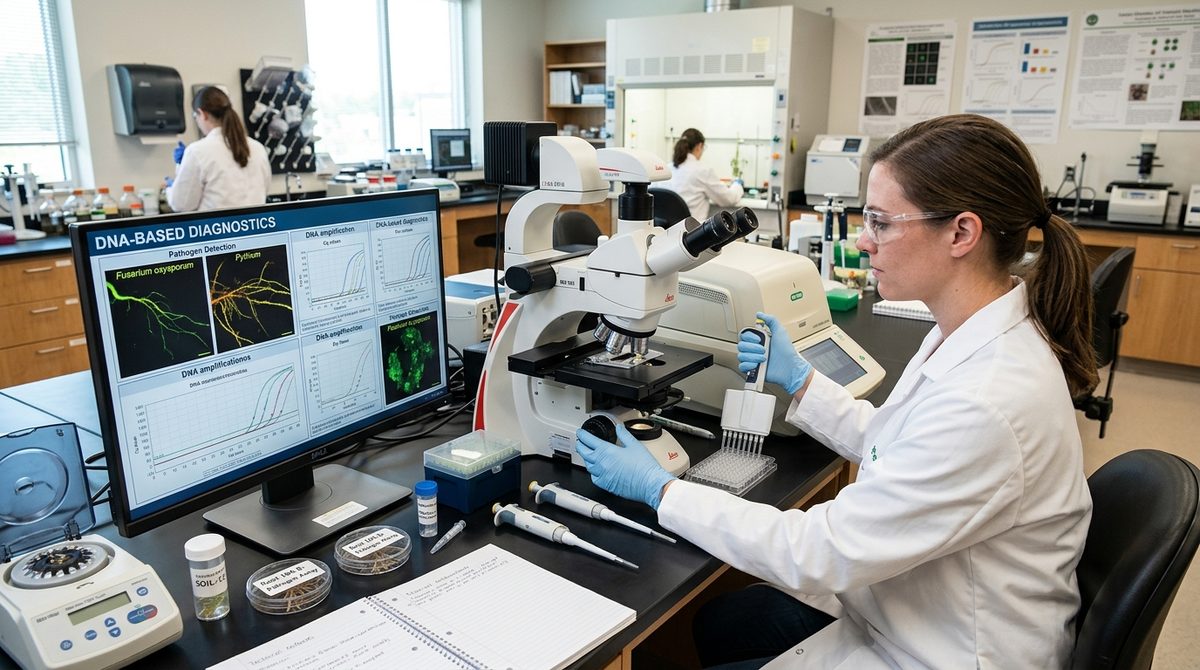
Plant-parasitic nematodes are silent destroyers in modern agriculture, causing billions of dollars in yield losses across soybean, corn, and cotton crops. These microscopic soil pests attack plant roots, severely disrupting water and nutrient uptake.
At Instituto Agro Genética (IAG), we have developed high-throughput Real-Time PCR molecular assays for exact species identification and quantitative detection of nematodes directly from soil and root samples.
Why Is Molecular PCR Testing Superior to Traditional Nematology?
Historically, nematode identification relied on manual morphological counting under optical microscopes — a slow process prone to human error that often fails to distinguish morphologically identical species or physiological races.
DNA-based PCR diagnostics provide crucial advantages:
- Extreme Sensitivity: Detects parasites even at low population densities, enabling proactive management before planting.
- Species & Race Precision: 100% accurate differentiation of Heterodera glycines (Cyst Nematode), Meloidogyne incognita & Meloidogyne javanica (Root-Knot Nematodes), and Pratylenchus brachyurus (Lesion Nematode).
- Rapid Turnaround Time: Delivers lab results in days instead of weeks.
Integrated Management Strategies Based on Molecular Data
With IAG’s precise diagnostic reports, farmers and agronomists can implement targeted interventions:
- Resistant Cultivar Selection: Deploy commercial seeds with proven resistance genes for the specific nematode race identified.
- Smart Cover Crop Rotation: Plant non-host cover crops (such as specific Crotalaria species) matched to the identified pest species.
- Targeted Bionematicide Application: Optimize biological seed treatments and soil applications based on exact quantitative thresholds.
🔬 Send Your Samples to IAG
Concerned about soil health and root pathogens in your field? Contact our specialists at Instituto Agro Genética (IAG) today to schedule molecular nematode testing.